Skip to content

The Longevity Store: a landing page for a supplement

Landing page design and build for The Longevity Store: one long desktop page for the Longevity Complete supplement, from an article-style hero to the buy box.

The Longevity Store

The engagement

Client
The Longevity Store
Industry
Daily supplements for people over 40
Year
To follow
Duration
To follow
Delivered
One desktop landing page: the article-style hero, 7 numbered reasons, the buy box with 3 plans, the reviews, the experts and the FAQ, built full stack
Stack
To follow
Role
Full-stack development: design and build of the landing page

The Longevity Store sells Longevity Complete, a daily supplement for people over 40 who want their energy back. Plainbuilt designed and built its landing page, full stack: one long desktop page that opens like an article, walks through seven numbered reasons with a chart and a 14-ingredient panel, then puts the buy box with three plans, the reviews, the experts and the FAQ under them. The page rests on one line: the argument comes before the buy box.

Who is the page for?

People over 40 who want their energy back, in the page's own words. The headline says so, the byline is a PhD nutritionist, and the summary says the decline is common after 40 but does not have to be permanent. The seven reasons that follow are written to that reader, one topic each: energy, NAD+, the ingredients, strength and recovery, skin, the customer wall and the guarantee.

What did Plainbuilt build?

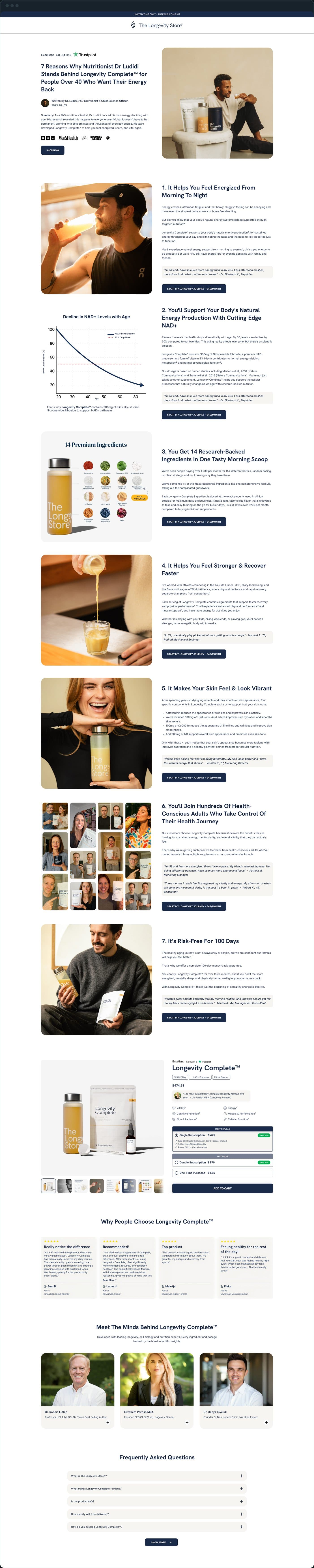
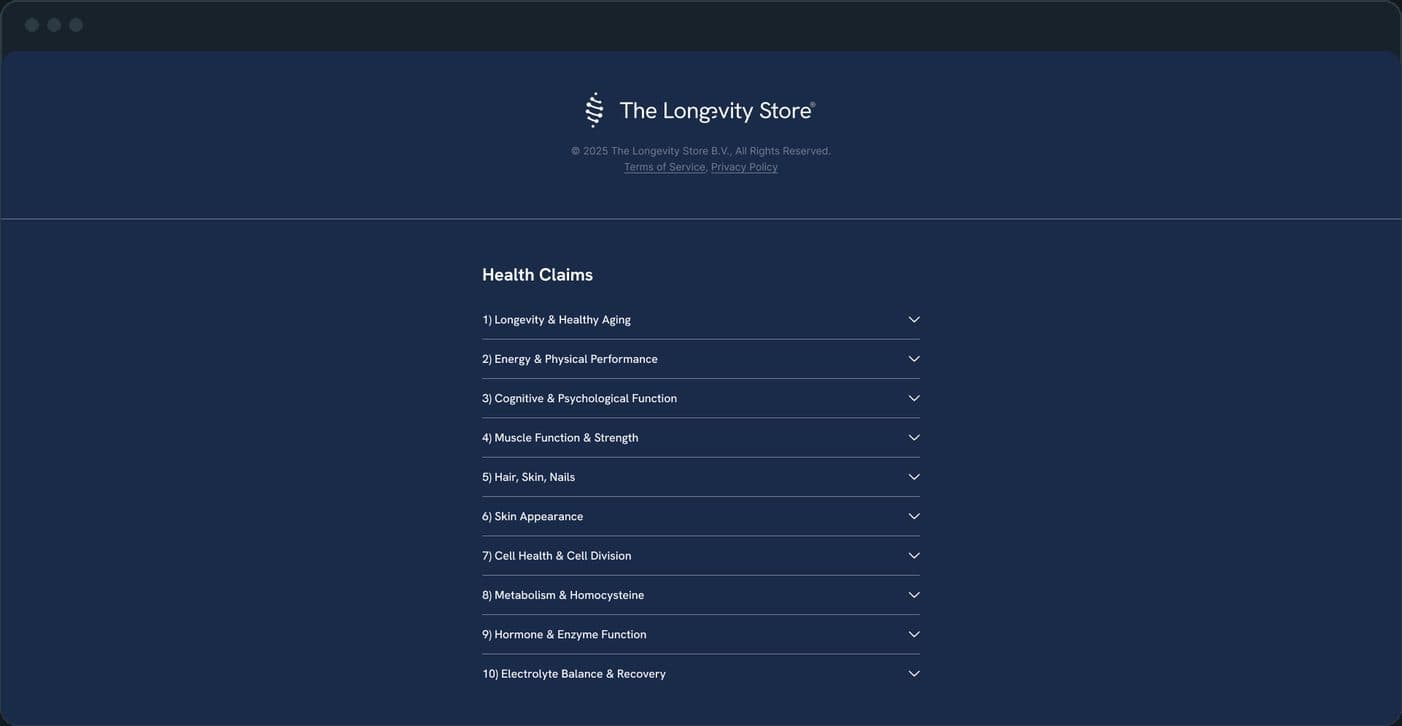
The landing page, full stack. A navy announcement bar and the wordmark header. The article-style hero with the headline, the byline, the summary, the press marks and the Shop now button beside the product photo. Seven numbered reasons, the visual on the left and the copy on the right every time, each with a quote card and the same button, with the chart and the 14-ingredient panel inside reasons 2 and 3 and a twelve-photo customer wall inside reason 6. The buy box with the thumbnail strip, the footnoted benefits and three plans above Add to cart. Four review cards, three expert cards, a five-question FAQ with show more, and the footer with the legal disclaimer, the terms and privacy links and ten health-claim accordions. The screens on this page are the design export.

Why does the buy box come after the reasons?

Because the page is written as an article. The first screen has one Shop now button, each of the seven reasons ends in the same button, and only after the seventh, the guarantee, does the product panel with the plans appear. The reviews, the experts and the FAQ sit under the buy box for the reader who wants more before adding to cart.

What is the page selling, and how does it open?

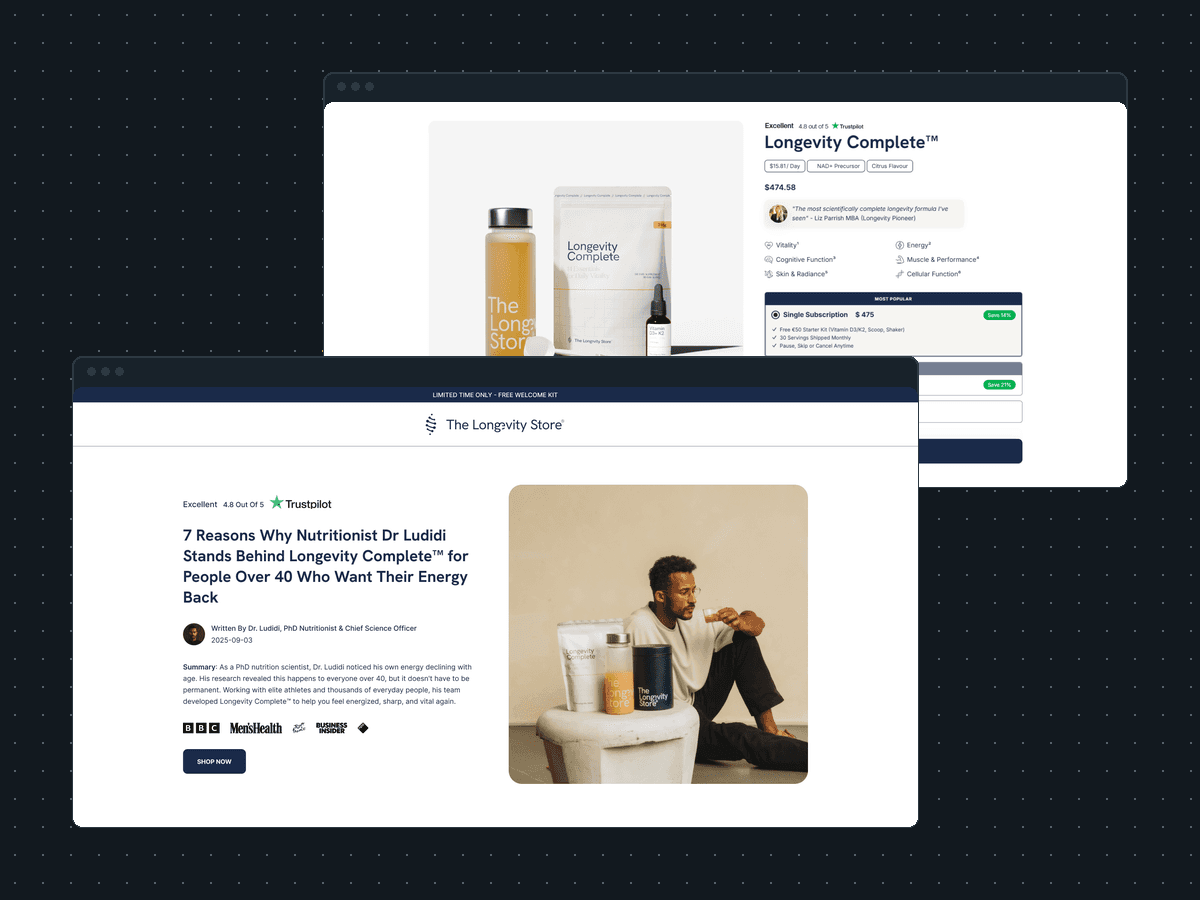
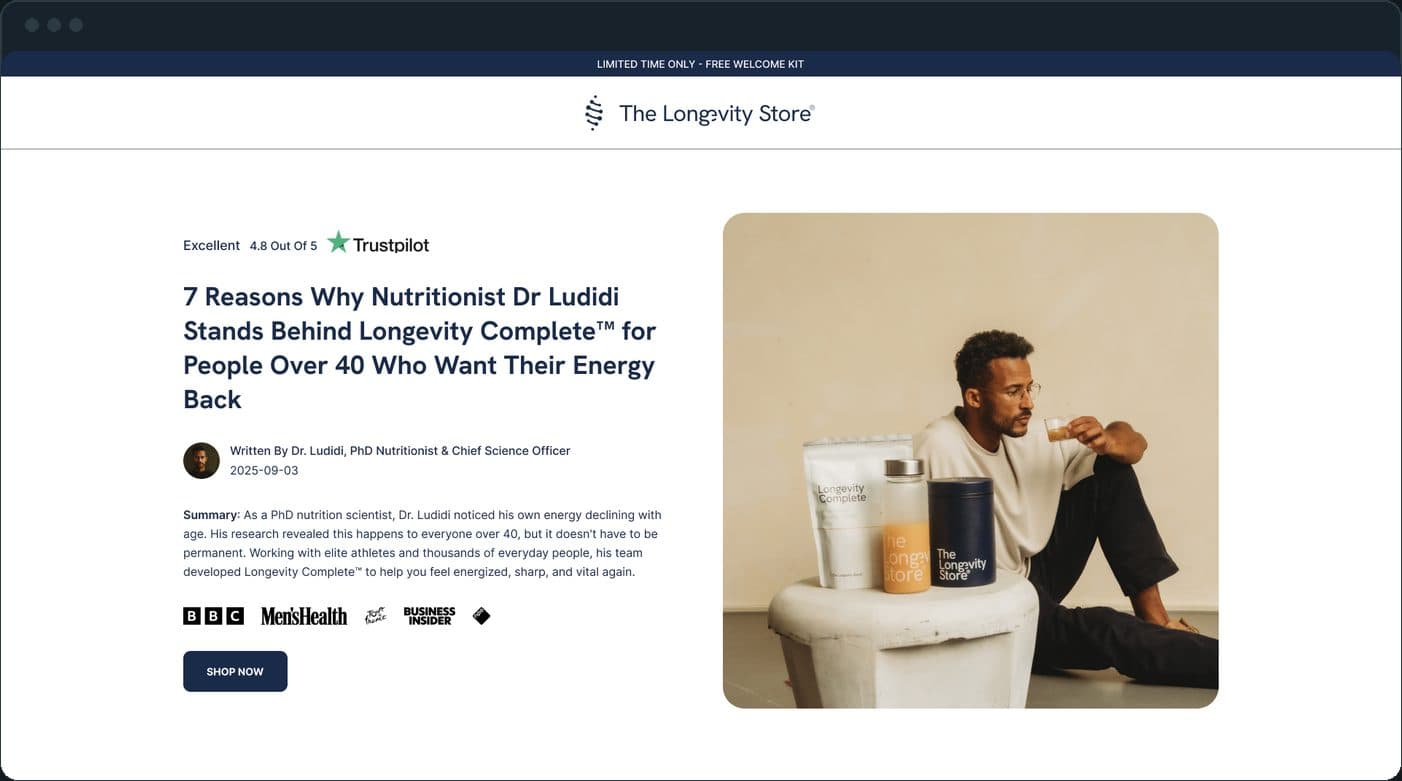
Longevity Complete, a daily supplement for people over 40, and it opens like an article, not a shop. Under a navy bar for the free welcome kit and the store's wordmark sit a review-score line, a headline that promises seven reasons, a byline with a photo and a date, a four-line summary and a row of press marks. One Shop now button beside a photo of the product in use is the only way to buy from the first screen.
The Longevity Store: What is the page selling, and how does it open?

How does the page make its case?

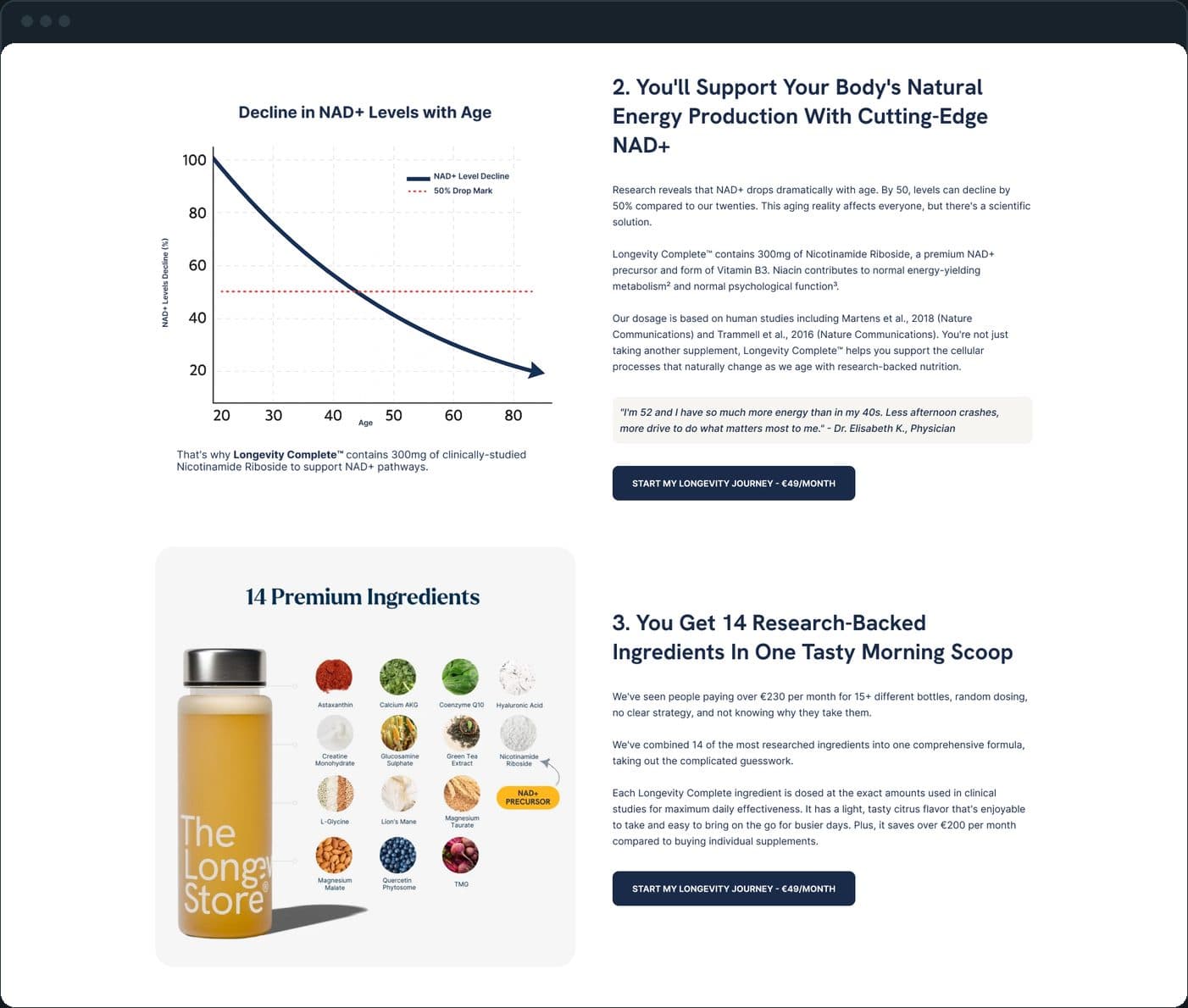
Seven numbered reasons, each a photo, a chart or a panel on the left and on the right the copy, an italic customer quote and the same navy button. Reasons 2 and 3, shown here, carry the page's chart and its ingredient panel: a line chart the copy titles Decline in NAD+ levels with age, running from age 20 to 80 with a dotted mark at the halfway point, and a 14-ingredient panel that names each ingredient beside the bottle, with the NAD+ precursor called out in amber.

The Longevity Store: How does the page make its case?

How does a visitor buy?

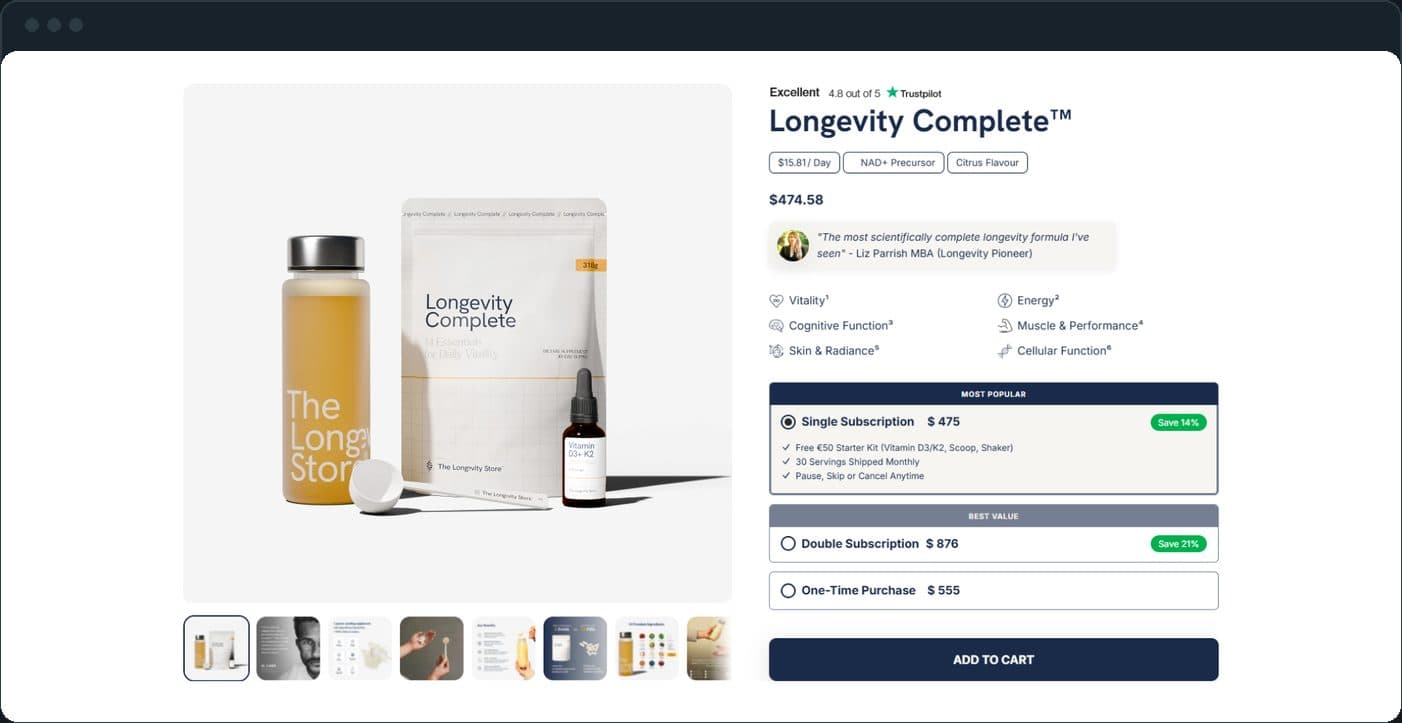
From the buy box two-thirds of the way down. The product photo sits on the left with an eight-image thumbnail strip under it. On the right: the product name, three pills for the price per day, the NAD+ precursor and the citrus flavor, a one-line endorsement, six footnoted benefits, then three radio-button plans. The single subscription is preselected and marked most popular, with its starter kit, monthly shipping and pause, skip or cancel lines under it; the double subscription is marked best value; the one-time purchase comes last, above a full-width Add to cart.

The Longevity Store: How does a visitor buy?

What does the whole page walk through?

Top to bottom: the hero, the seven reasons with the visual on the left and the copy on the right every time, the buy box, four review cards with an age and an advantage tag each, three expert cards, and a five-question FAQ with a show-more button. The navy footer under the FAQ, with the terms and privacy links and ten health-claim accordions, is the last screen on this page.

The Longevity Store: What does the whole page walk through?

The decisions

  • An article before a shop.

    The first screen is a headline, a byline, a summary and press marks, with one Shop now button. The buy box waits until the seven reasons have been read: the page gives the argument first and the plans after.

  • Seven reasons, one shape.

    Every reason is the same row: the visual on the left, and on the right a numbered heading, the copy, an italic customer quote on paper and the same navy button. Nothing switches sides, so the page can be scanned by its numbers.

  • One buy box, three plans.

    The plans are radio buttons, not three cards. The single subscription is preselected and marked most popular, with the starter kit, the monthly shipping and the pause, skip or cancel line under it; the double subscription is marked best value; the one-time purchase is the third row. One Add to cart button covers all three.

  • The claims carry their footnotes.

    Each of the six benefits in the buy box carries a superscript number, the claims in reasons 1, 2 and 4 carry theirs, and reason 2 names the two studies under its chart. The footer holds ten health-claim accordions. The page puts its sources where a reader can find them.

What was the outcome?

Designed and built

One outcome per item, dated, or not disclosed: never an estimate.

More screens

  • The Longevity Store

Common questions

Did Plainbuilt build The Longevity Store landing page?

Yes. Plainbuilt designed and built the landing page, full stack. Longevity Complete, the supplement it sells, is the client's product, and the claims on the page are the client's.

Can Plainbuilt design a landing page like this?

Yes. One long page that opens with the argument, numbers the reasons, puts the buy box after them and carries the reviews, the experts and the FAQ below. Book a working session and bring the product.