Skip to content

LUMES: a landing page for boxed home styling kits

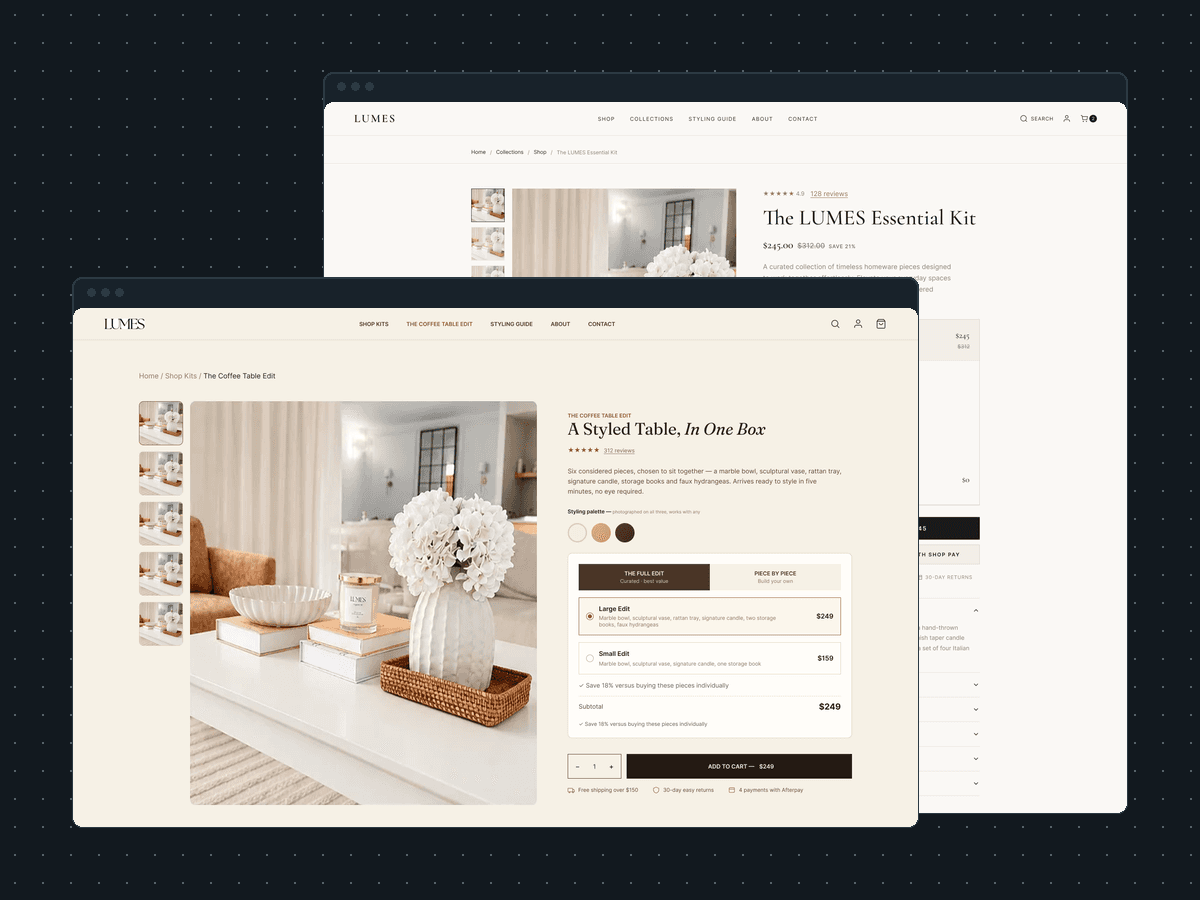
Landing page design and build for LUMES, a homewares brand: 2 desktop product pages with a kit configurator, add to cart, styling steps and a comparison table.

LUMES

The engagement

Client
LUMES
Industry
Homewares retail
Year
To follow
Duration
To follow
Delivered
2 product pages, desktop web: the kit configurator with add to cart, the styling steps, a comparison table, reviews and a FAQ, built full stack
Stack
To follow
Role
Full-stack development: design and build of the landing page

LUMES is a homewares brand that sells styling kits: six pieces chosen to sit together, boxed, with the method to arrange them. Plainbuilt designed and built its landing pages full stack: two desktop product pages, The Coffee Table Edit and The LUMES Essential Kit, each with a kit configurator, add to cart, a comparison table, reviews and a FAQ. The design rests on one line from the first page: a styled table, in one box.

Who is LUMES for?

The customer who wants a styled coffee table or dining table and does not want to source the pieces one at a time. The pages say so in their own words: the Coffee Table Edit arrives ready to style in five minutes, and the comparison table sets one order and one delivery against buying separately. The kit is photographed on white, light wood and dark wood, so the page works for whichever table the customer has.

What did Plainbuilt build?

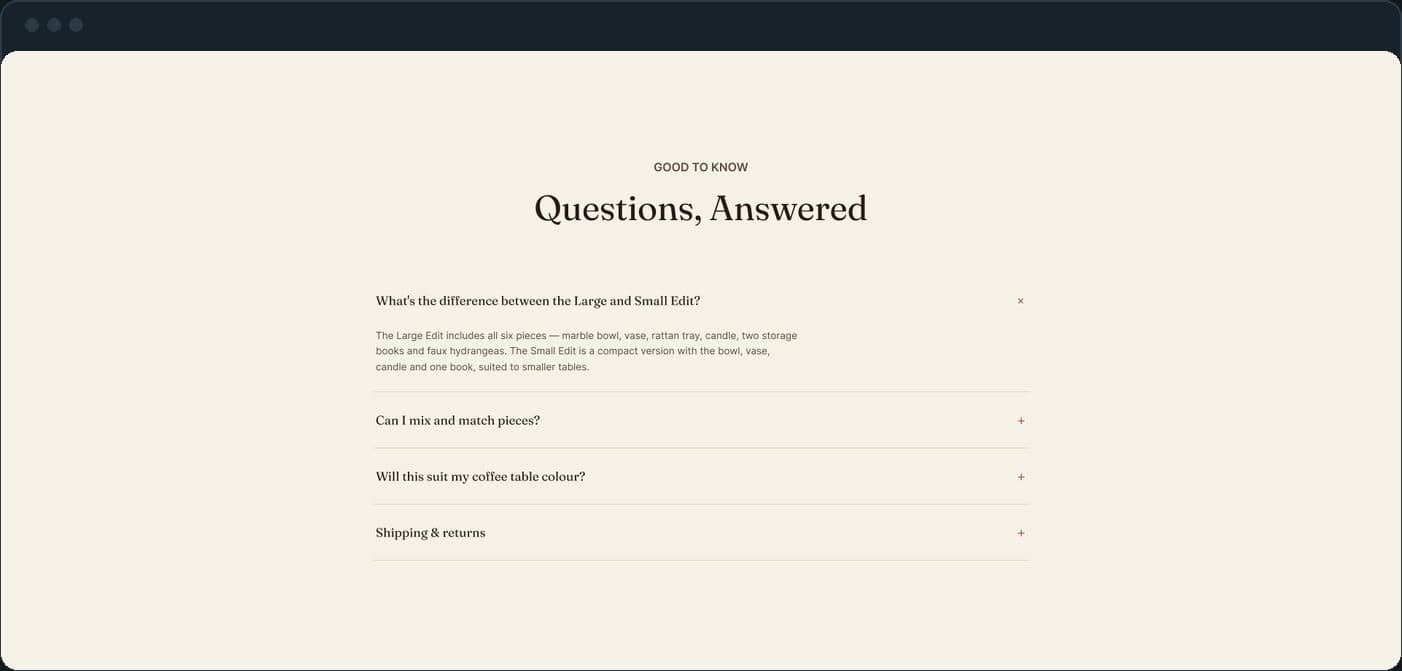
Two product pages at desktop width, full stack. The Coffee Table Edit page: the gallery and the pitch, the Full Edit or Piece by Piece configurator with the Large Edit and the Small Edit, quantity and add to cart, the five-step styling method, the three table bases, four reasons for the kit, the comparison table, community photos, reviews, a FAQ and a footer with an email sign-up. The Essential Kit page: the Full Kit or Build Your Own choice with the six pieces listed, add to cart, wishlist and an express-pay button, six accordions for what is included, materials, dimensions, care, shipping and a FAQ, then six reasons in icon tiles, a comparison table, filtered reviews, customer stories, a three-chapter story, a featured kit, three collections, the three steps, the brand story and a subscribe band.

What does the order flow look like?

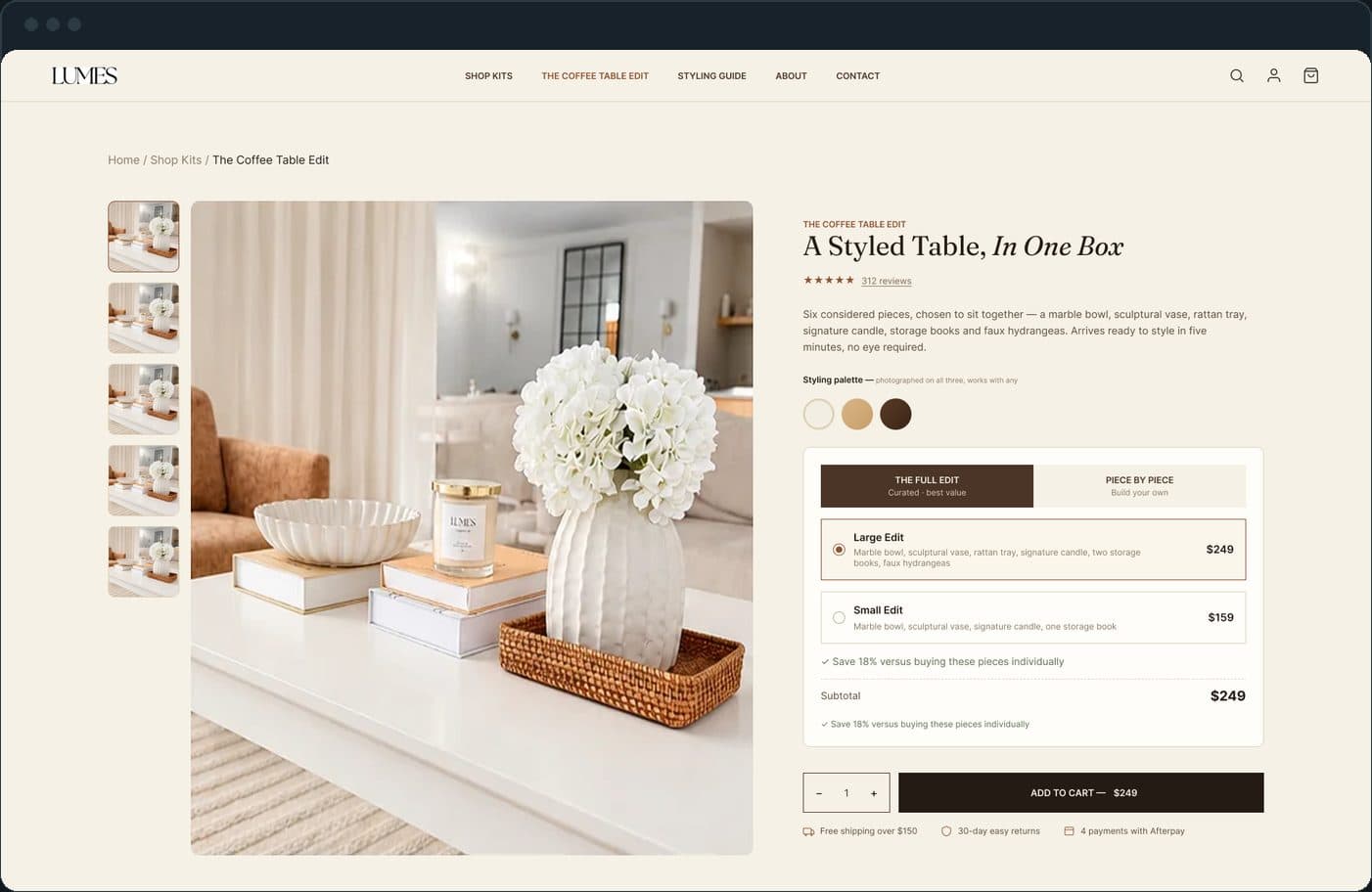
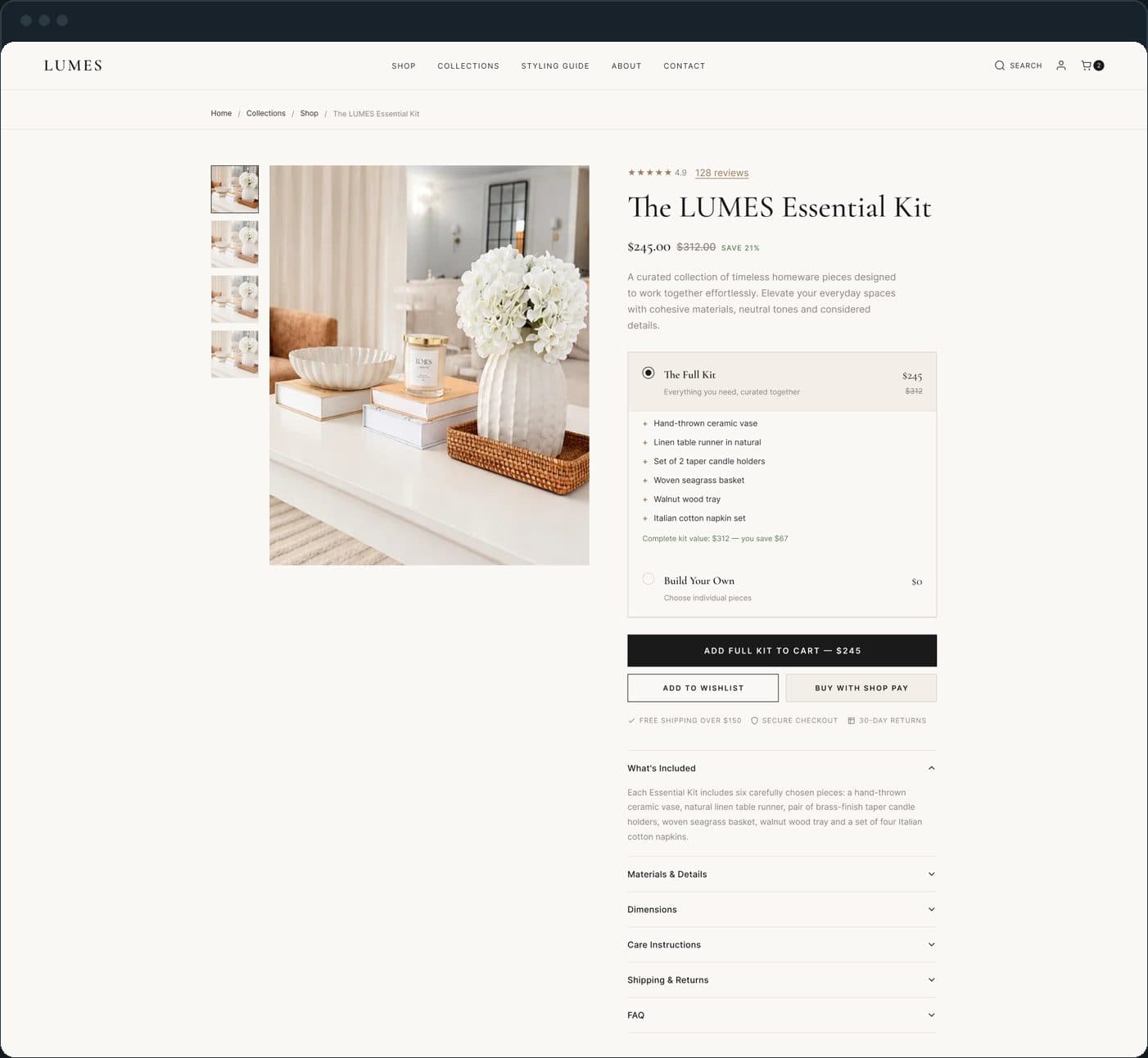
Pick the kit: The Full Edit tab is selected by default, Piece by Piece is the other tab. Pick the size: the Large Edit with all six pieces, or the Small Edit with the bowl, the vase, the candle and one book. The subtotal updates, the quantity stepper sits beside the add-to-cart button, and the three lines under it (the shipping threshold, 30-day returns and pay in 4) answer the last three questions before the click. On the Essential Kit page the same choice is a radio card, The Full Kit or Build Your Own, with three buttons under it: add the full kit to the cart, add it to a wishlist, or pay express.

Why is the order form in the first screen?

Because the page is a shop, not a brochure. The photo and the pitch sit beside the configurator, and the story, the method, the comparison and the reviews come after it for the customer who scrolls. The customer who arrived ready to buy sees the price, the two sizes, the shipping line and the button without moving. Everything below the fold exists to bring the second kind of customer back up to that button.

What does LUMES sell, and how does the customer choose a kit?

The Coffee Table Edit is a styled table in one box: six pieces chosen to sit together, a marble bowl, a sculptural vase, a rattan tray, a candle, storage books and faux hydrangeas. The first screen is the order form. The Full Edit or Piece by Piece, then the Large Edit with all six pieces or the Small Edit with four, a subtotal, a quantity stepper and add to cart, with the shipping, returns and pay-in-4 lines under the button. Three swatches say the kit is photographed on white, light wood and dark wood.
LUMES: What does LUMES sell, and how does the customer choose a kit?

What is on the Essential Kit page above the fold?

The gallery with four thumbnails, the name, the price with the kit value struck through, and a radio card: The Full Kit with its six pieces listed, or Build Your Own. Three actions follow, add full kit to cart, add to wishlist and an express-pay button, then the trust line and six accordions: what's included, materials and details, dimensions, care instructions, shipping and returns, FAQ. The customer can read every detail without leaving the order form.

LUMES: What is on the Essential Kit page above the fold?

How do the pages argue for a kit over single pieces?

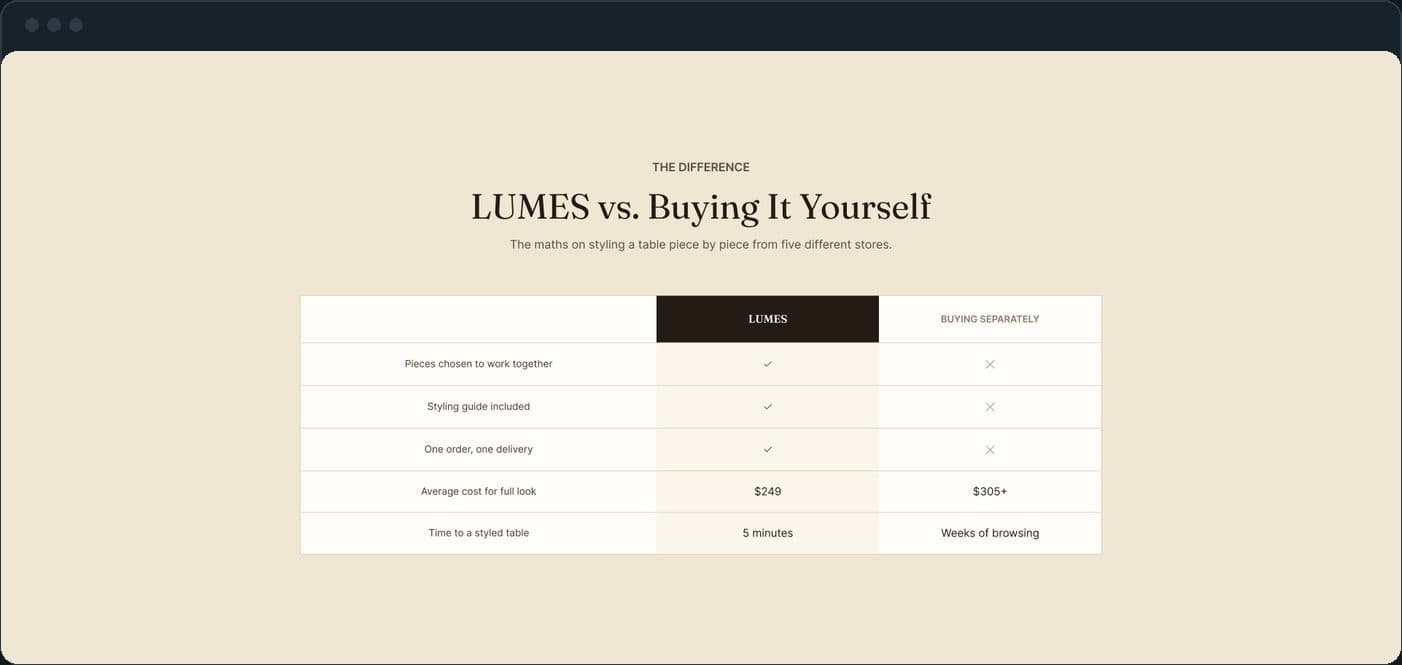
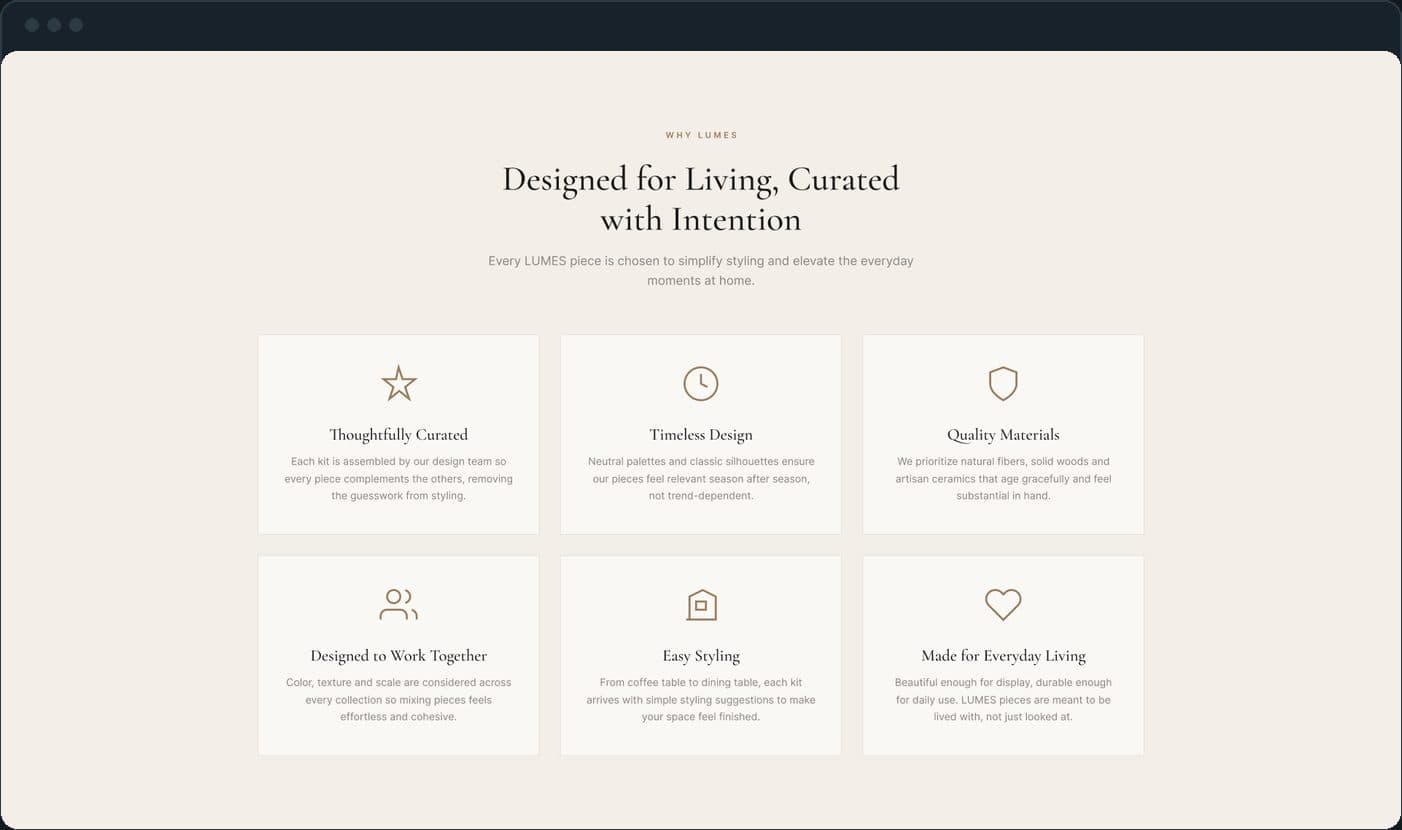
Each page carries a comparison table. The Coffee Table Edit sets LUMES against buying separately in five rows: pieces chosen to work together, a styling guide included, one order and one delivery, the cost of the full look and the time to a styled table. The Essential Kit page puts six reasons in icon tiles first, then its own table against typical alternatives, three columns and five rows.

  • LUMES: How do the pages argue for a kit over single pieces?
  • LUMES: How do the pages argue for a kit over single pieces?

How do the pages explain how it works?

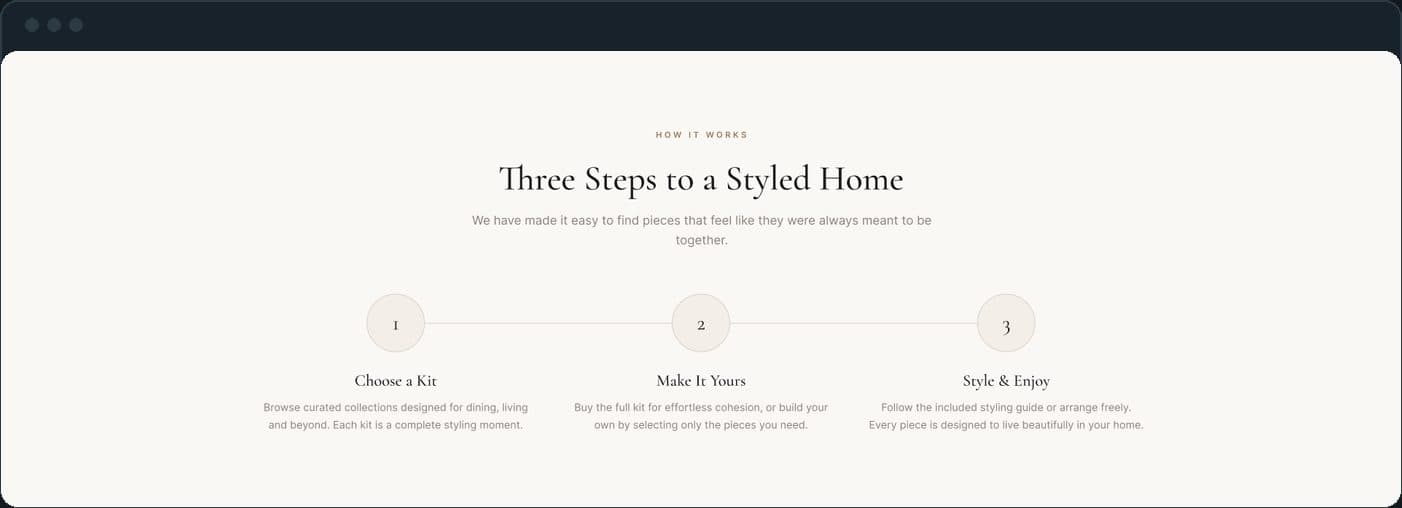
Three steps on one line, numbered: choose a kit, make it yours (the full kit, or only the pieces you need), style and enjoy with the included styling guide. The Coffee Table Edit page goes further with Style It In Five Steps: start with your base, build height, add your foundation, create a focal moment, add warmth. The order matters more than the pieces, the page says.

LUMES: How do the pages explain how it works?

How does the page tell the brand's story?

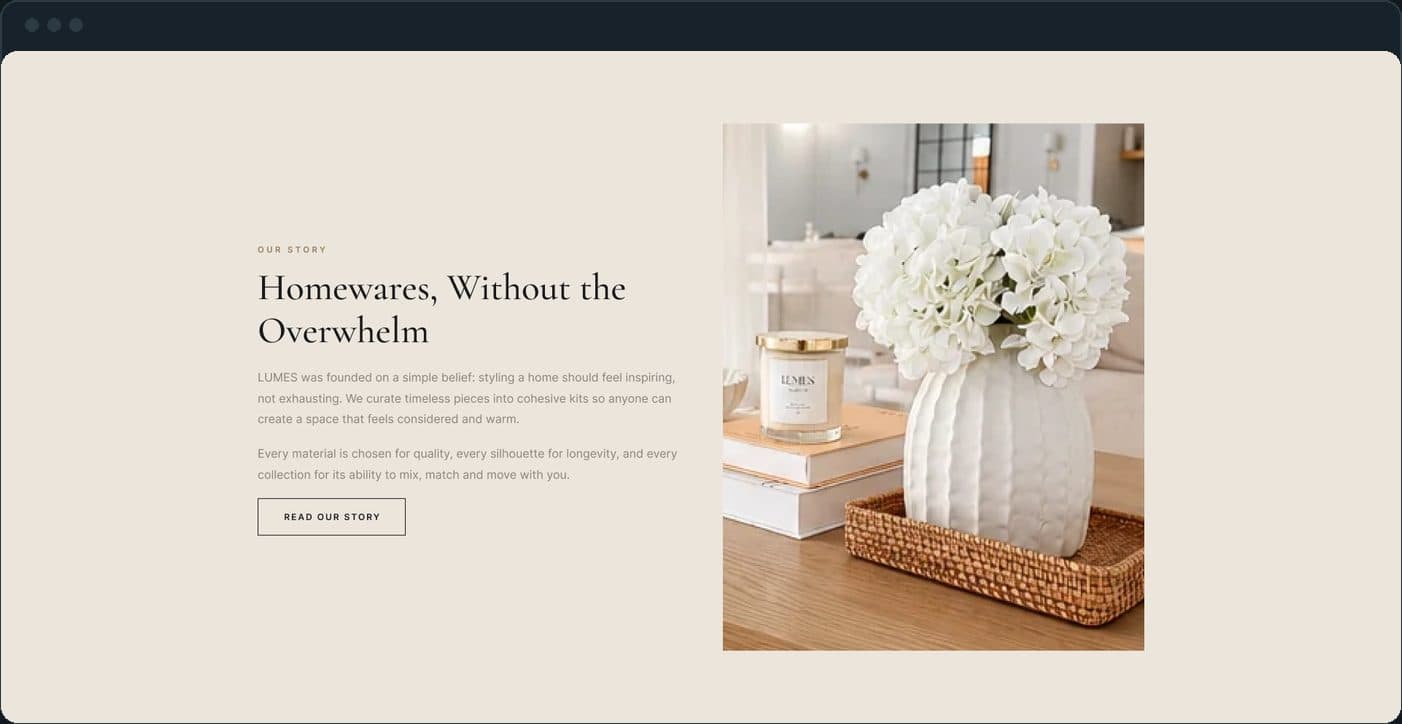
Near the end of the Essential Kit page, Homewares, Without the Overwhelm: the belief the brand was founded on, that styling a home should feel inspiring, not exhausting, a second paragraph on materials and silhouettes, a Read Our Story button and one photograph of the set on light wood. It sits after the collections and the three steps, before the subscribe band and the footer.

LUMES: How does the page tell the brand's story?

The decisions

  • The order form is the first screen.

    The configurator sits beside the product photo, not under a scrolling pitch: kit or single pieces, size, quantity, add to cart, and the shipping, returns and payment lines under the button. The customer who arrived ready to buy never has to scroll.

  • One kit, three tables.

    Three palette swatches under the pitch say the kit is photographed on white, light wood and dark wood, and a dark band lower on the page has a tile for each base. The page answers the question about the customer's own table before the FAQ asks it.

  • The method ships with the pieces.

    Style It In Five Steps on the Coffee Table Edit page and Three Steps to a Styled Home on the Essential Kit page: the pages sell the arrangement, not only the objects. Each kit comes with a styling guide, and both pages say so.

  • The case is made in a table.

    LUMES against buying separately on one page, LUMES against typical alternatives on the other. The first has rows with a check or a cross, the cost and the time; the second puts the two sides in plain words, three columns and five rows. Both sit in the middle of the page, where the customer weighs it.

What was the outcome?

Designed and built

One outcome per item, dated, or not disclosed: never an estimate.

More screens

  • LUMES

Common questions

Did Plainbuilt build LUMES?

Yes. Plainbuilt designed and built the site. The two product pages carry the kit configurator, the cart actions and everything below the fold.

What is LUMES?

A homewares brand that sells styling kits: six pieces chosen to sit together, boxed, with a styling guide. The pages are the product pages for two kits, The Coffee Table Edit and The LUMES Essential Kit.

Can Plainbuilt design a product page like this?

Yes. One page that says what the product is in the first screen, lets the customer choose the full kit or single pieces and add it to the cart, then makes the case below the fold. Book a working session and bring the product.